
Bangkok in a wool suit sounds like a bad idea, until you understand what a tropical wool suit actually is. Most guys picture heavy flannel or thick worsted when they hear “wool” and assume it’s a sauna sentence. That’s the wrong fabric. A properly made tropical weight wool suit uses an open, breathable weave that lets air move through the cloth instead of trapping heat against your skin.
So what makes it different, and why does it work better than linen or cotton in Bangkok’s climate? A tropical worsted wool suit holds its shape after a sweaty commute, resists wrinkling in ways cotton never will, and drapes with a crispness that linen simply can’t match. It’s the fabric choice serious tailors reach for when a client needs to look sharp at 34 degrees Celsius and still look sharp eight hours later.
We’ll walk through what tropical wool actually is, how it’s woven, why a navy tropical wool suit is the smartest first choice, and what to check before you buy one, whether off the rack or cut to your own measurements at the bench.”
Why tropical wool suits perform in hot climates
Wool fiber is naturally hollow, and that hollow core is what lets it absorb moisture vapor from your skin and release it into the air before you ever feel damp. That’s the opposite of what most people expect from wool, but it’s basic textile science. A tropical weight wool suit takes that natural moisture management and pairs it with a construction built specifically to move air, not trap it. The result is a garment that regulates temperature instead of fighting it.
The open weave is the real secret
Ordinary worsted wool for a business suit in London or New York gets woven tight, often in a plain or twill weave that packs yarns close together for warmth and durability through a cold winter. Tropical cloth flips that logic. Mills weave it with an open weave structure, spacing the yarns further apart so air can pass straight through the cloth instead of pooling against your body. Hold a swatch of tropical wool up to a light and you’ll see tiny gaps between the threads that you won’t find in a standard flannel or heavy twill.
A tropical wool suit works because the cloth is built to move air, not just resist wrinkles.
Weight and yarn count decide comfort
Not every wool suit labeled “lightweight” is genuinely tropical, so the numbers matter more than the marketing copy, and weight, weave and fibre are what actually make the best fabric for a tropical climate suit. Weight is measured in grams per square meter (gsm) or ounces per yard, and this is where a real tropical cloth separates itself from a suit that’s just thinner, not more breathable.
| Suit type | Typical weight | Best climate |
|---|---|---|
| Heavy worsted (winter) | 340-400 gsm | Below 15°C |
| Standard worsted (year-round) | 260-320 gsm | 15-25°C |
| Tropical worsted wool | 180-240 gsm | 25°C and above |
Below roughly 220 gsm, you start losing structure, so the sweet spot for a tropical worsted wool suit sits between 180 and 240 gsm, light enough to breathe but heavy enough to hold a crease and drape properly on the shoulder.
How wool actually cools you down
Cotton and synthetic blends absorb sweat and hold it against the skin, which is why a cotton shirt feels heavier as the day goes on in Bangkok’s humidity. Wool does the reverse. It pulls moisture away from your body and lets it evaporate through the open weave, so the suit actually feels drier at 4pm than it did at 9am. That’s a real, measurable property of the fiber, not a sales pitch, and it’s why tailors at Stitch & Style keep tropical-weight cloth on the bench year-round for clients who need to sit through meetings, weddings, and flights without wilting. Fit still matters, but the fabric does most of the heavy lifting before a single stitch goes in.
How to choose the right tropical wool suit
Picking a tropical wool suit starts with color, not cut. A navy tropical wool suit cut from a deep navy blue suiting cloth works for nearly every occasion in Bangkok, from client meetings to weddings, and it hides travel creases better than gray or black under fluorescent office lighting. Charcoal comes second, useful for anything after 6pm, while lighter tans and mid-grays suit daytime events but show wear faster in a city where you’re sweating through a commute before 9am.
Check the weight tag, not just the label
Don’t trust the word “lightweight” printed on a swing tag. Ask for the actual gsm number, because plenty of suits marketed as summer-ready sit at 260 gsm or heavier, which is standard worsted wearing a tropical costume. A genuine tropical weight wool suit runs 180 to 240 gsm, and any reputable tailor or mill should hand you that spec without hesitation.
If a tailor can’t tell you the gsm, they can’t tell you it’s actually tropical.
Match construction to how you’ll wear it
Half canvas construction gives you a suit that breathes at the chest and shoulder while still holding shape, which matters more in heat than a fully canvassed jacket built for cold-climate structure. Ask about these three things before you commit:
- Gsm weight: confirm it falls between 180-240 gsm
- Canvas type: half canvas breathes better than full canvas in humidity
- Lining: partial or unlined jackets trap far less heat than fully lined ones
Decide between off-the-rack and made-to-measure
Off-the-rack tropical wool suits fit a general body shape, which works fine if your proportions are standard, but bespoke construction adjusts for humidity-driven habits like rolling sleeves or loosening a collar mid-afternoon, and it helps to know what actually separates made-to-measure from full bespoke before you decide. At Stitch & Style, clients browsing the mill-direct wool shop can pull a tropical worsted wool suit length starting from half a metre, then add the full tailoring service so the jacket is cut to actual shoulder slope and arm length instead of a size chart average. That difference shows up most in how the suit sits after eight hours in Bangkok’s heat, not on the fitting room mirror at 10am.
Tropical wool vs linen and cotton for summer
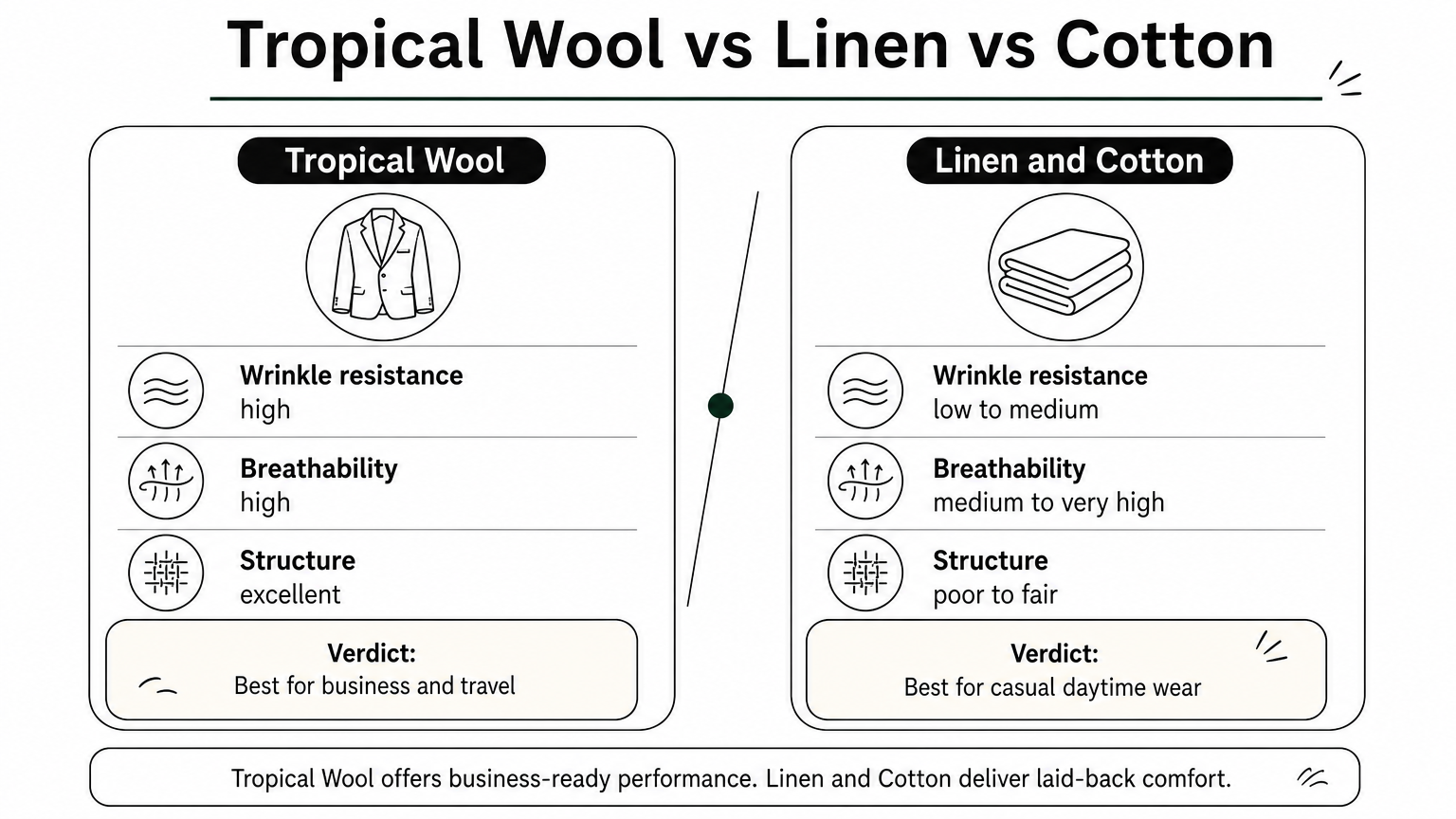
Linen gets the credit for hot-weather dressing, but a tropical wool suit outperforms it in every category except first impressions on a hanger. Linen wrinkles the moment you sit down, and by the time you’ve stood through a wedding ceremony, your jacket looks like you slept in it. Cotton suits fare a little better but still crush at the elbows and knees, and they absorb sweat rather than releasing it, which is exactly backward for Bangkok’s climate.
Where each fabric actually wins
Cotton wins on price and casual styling, and linen wins on raw breathability in a still, dry heat, as a closer comparison of the three cloths for Bangkok heat makes clear. Neither wins on structure. A tropical worsted wool suit holds a shoulder line and a crease through a full day of meetings, humidity, and taxi rides in a way that woven cellulose fibers can’t replicate, because wool fiber has natural elasticity that snaps back into shape instead of staying creased.
| Fabric | Wrinkle resistance | Breathability | Structure/drape | Best use |
|---|---|---|---|---|
| Tropical wool | High | High | Excellent | Business, weddings, travel |
| Linen | Low | Very high | Poor (crushes fast) | Casual daytime, beach events |
| Cotton | Medium | Medium | Fair | Casual, weekend wear |
Linen breathes, cotton absorbs, but only wool bounces back into shape by the time you sit down at the next meeting.
Why this matters for repeat wear
Moisture behavior separates these fabrics as much as looks do. Wool pulls sweat vapor away from your skin and releases it through the open weave, so a jacket worn at 9am doesn’t feel heavier by 5pm. Cotton and linen soak up moisture and hold onto it, which is why a linen suit can smell and feel damp by midafternoon in 90 percent humidity. Given that most clients need a suit that photographs well at a morning ceremony and still looks presentable at an evening reception, a tropical weight wool suit is the only one of the three built to do both without a mid-day change of clothes.
How to style a tropical wool suit for any occasion
A navy tropical wool suit works as the anchor piece of a warm-weather wardrobe because it moves between settings without looking like you’re trying too hard. Swap the tie, swap the shoes, and the same jacket carries you from a 9am pitch meeting to a rooftop dinner without a wrinkle showing. That versatility is the real payoff of investing in a tropical worsted wool suit instead of buying separate suits for separate seasons.
Business and client meetings
Keep the styling simple for office settings. A crisp white or pale blue shirt, a plain silk tie, and black leather shoes turn a navy or charcoal tailored business suit into standard boardroom armor anywhere from Bangkok to Singapore. Skip pocket squares and patterned ties for internal meetings, but bring them out for client pitches or presentations where a sharper look matters.
Weddings and evening events
For weddings, a tropical weight wool suit in navy or a soft mid-gray reads as formal without the stiffness of a heavier winter cloth. Pair it with a lighter shirt, a subtle tie or bow tie, and suede loafers if the venue allows it. The suit’s drape holds through hours of standing, photos, and dancing, which is exactly where linen for a Bangkok summer wedding starts to fail.
Dress it up with a tie for the ceremony, then lose the tie and open the collar for the reception, and the same jacket still looks intentional.
Travel and casual weekend wear
Because the fiber resists creasing, a tropical wool suit is the smartest thing you can pack for a business trip. Fold the jacket in a garment bag, wear the trousers on the flight, and it still looks pressed on arrival. For casual outings, drop the tie, roll the sleeves, and wear the jacket over a plain t-shirt.
- Office: white shirt, silk tie, black shoes
- Wedding: pale shirt, subtle tie, suede loafers
- Travel: no tie, open collar, minimal packing
Clients building a business wardrobe as expats or frequent travelers often start with the made-to-order suits at Stitch & Style, then add a second color once the first proves itself in daily wear.
How to care for a tropical wool suit in the heat
Heat doesn’t wear out a tropical wool suit, neglect does. The fabric is built to handle Bangkok’s climate, but sweat, humidity, and bad storage habits will undo that engineering faster than any wedding or twelve-hour flight, which is why caring for a bespoke suit in a humid climate is its own discipline. A little discipline after each wear keeps a tropical weight wool suit looking sharp for years instead of seasons.
Hang it right after every wear
Give the jacket at least 24 hours on a wide wooden hanger before it goes back in the closet, ideally somewhere with airflow rather than a sealed cupboard. That resting period lets the wool fiber release the moisture it absorbed during the day, which is the same mechanism that made you feel dry while wearing it. Skip this step and you trap humidity inside the weave, which is how mildew and odor start.
A suit hung to breathe overnight outlasts one stuffed straight back into a closed wardrobe.
Cleaning without stripping the fiber
Over-dry cleaning is the fastest way to age a tropical worsted wool suit, since the solvents strip natural oils from the fiber and leave the open weave brittle. Follow a simple routine instead:
- Brush after wear: a soft clothes brush removes dust and surface sweat before either sets into the cloth
- Spot clean stains: a damp cloth handles most marks without a full clean
- Dry clean sparingly: twice a season is plenty for a suit worn regularly in heat
- Press with steam, not direct heat: steam relaxes creases without flattening the open weave
Storage between Bangkok’s rainy season swings
Humidity swings between Bangkok’s dry and rainy months are exactly where a navy tropical wool suit either holds up or falls apart in storage. Silica packets in the wardrobe keep moisture from settling into the wool during the wettest months, and rotating suits rather than wearing the same one daily gives each garment time to fully dry out. Clients who bring suits back to the bench at Stitch & Style for a mid-life press or minor adjustment usually get another two or three years out of a jacket that would otherwise start losing shape.
The takeaway on tropical wool suits
A tropical wool suit isn’t a compromise you make for hot weather, it’s the smarter choice once you understand the fabric. Open weave construction, the right gsm weight, and wool’s natural moisture-wicking core beat linen and cotton on every measure that matters: structure, breathability, and how the suit looks after eight hours in Bangkok’s heat. Choose navy first, confirm the gsm before you buy, and treat the jacket right between wears, and you’ll get years out of a single suit instead of replacing it every season.
Getting the fit and fabric right from the start saves you the cost of a second suit later. If you’re ready to feel the difference an open-weave, mill-direct cloth makes on your own bench-cut jacket, reserve a time on the bench with Stitch & Style Bespoke Tailor and start with a fabric length that’s actually built for the climate you live in.