
Tweed has a reputation problem. Most people picture a scratchy, boxy jacket built for a Scottish moor, not a suit that actually fits your shoulders and moves with you. That reputation usually comes from off-the-rack tweed, cut to a generic block and rarely adjusted for how you actually stand or walk. A made to measure tweed suit solves that problem at the pattern stage, not with alterations tacked on afterward.
So what does made-to-measure actually mean for a heavy cloth like tweed, and how is it different from bespoke or the suit hanging in a department store? In short, your body measurements shape a base pattern before a single piece of cloth is cut, so the jacket sits on your shoulders instead of your shoulders adjusting to the jacket. That distinction matters more with tweed than with a lightweight wool, since its weight and structure show every fitting flaw in daylight.
This article breaks down what a tweed suit made to measure actually involves, from cloth weight and weave to the fitting process itself. We’ll also cover how made to measure tweed suits compare on price and turnaround, so you know what to expect before you commit fabric or budget to one.
Why choose a made-to-measure tweed suit
Tweed is honest cloth. It’s heavy, textured, and doesn’t hide a bad cut the way a soft worsted wool might. A jacket that pulls across the back or bunches at the collar in a lightweight suiting fabric might go unnoticed at a glance, but tweed’s density and visible weave make every fit problem obvious under normal light. That’s the main reason a made to measure tweed suit makes more sense than buying off the rack: the fabric itself demands a pattern that actually matches your frame.
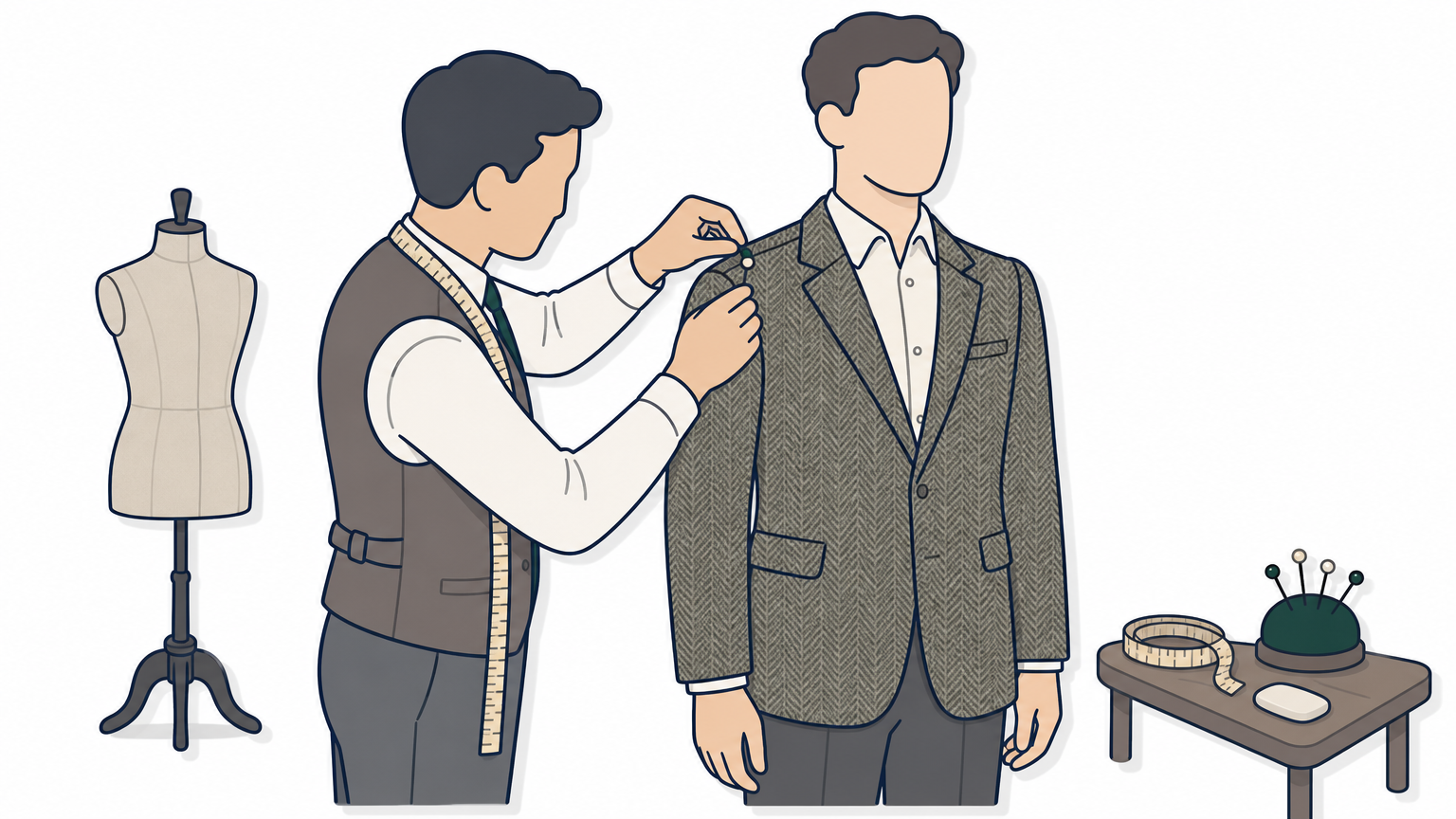
The fit problem tweed magnifies
Off-the-rack tweed jackets are built to a standard block, then adjusted with darts and taken-in seams if you’re lucky enough to find a tailor willing to touch heavy cloth. The trouble is that tweed doesn’t drape the way alterations assume it will. It holds its shape, so a jacket let out at the waist or taken in at the shoulder often looks patched rather than fitted. A pattern drafted from your own measurements avoids that problem from the start, because the cloth is cut to your shoulder slope, arm length, and posture rather than forced to approximate them afterward.
A tweed suit either fits from the pattern up, or it never quite fits at all.
A pattern built around your body
When you order a tweed suit made to measure, the tailor takes a full set of measurements and notes how you actually stand, not just your chest and waist size. That data becomes a working pattern specific to you, stored for every future order. Typical measurement points include:
- Shoulder width and slope, since tweed’s structure shows a poor shoulder line more than any other fabric
- Chest, waist, and seat, adjusted for how you carry weight rather than a generic size chart
- Sleeve length and arm posture, including whether one arm sits forward of the other
- Jacket length relative to your height and leg proportion
- Trouser rise and break, so the drape sits right whether you wear the suit with boots or oxfords
This level of detail is why made to measure tweed suits fit noticeably better than anything bought straight off a rack, even when the rack size looks correct on paper.
Style choices you control from day one
Beyond fit, made-to-measure gives you control over details that off-the-rack tweed locks in before you ever see the jacket. Lapel width, button stance, vent style, and lining color are all decisions you make rather than inherit. Tweed suits carry a lot of visual weight because of their texture and pattern, so getting these proportions right matters more than it does with a plain navy suit. A notch lapel in a heavier gauge reads differently on a herringbone than it does on a solid worsted, and a tailor who’s working from your measurements can advise on that balance in real time rather than leaving you to guess from a rack of finished jackets.
Cost and durability that pay off over time
Tweed is a long-term fabric. A well-made jacket in a genuine mill-woven cloth can outlast several cheaper suits, which changes the math on cost per wear even when the upfront price is higher than a department store rack. Made-to-measure tailoring adds labor cost compared to buying finished stock, but it also means the garment doesn’t need re-tailoring in a year once you’ve lost or gained a few pounds, since the original pattern is on file and can be adjusted rather than rebuilt. At Stitch & Style, that pattern-on-file approach is built into the full bespoke tailoring order service, so a second suit from the same client starts from a known fit rather than a fresh set of guesses.
Choosing made-to-measure over off-the-rack tweed isn’t about luxury for its own sake. It’s a practical response to a fabric that punishes poor fit and rewards a pattern built specifically for the person wearing it.
How the made-to-measure process works
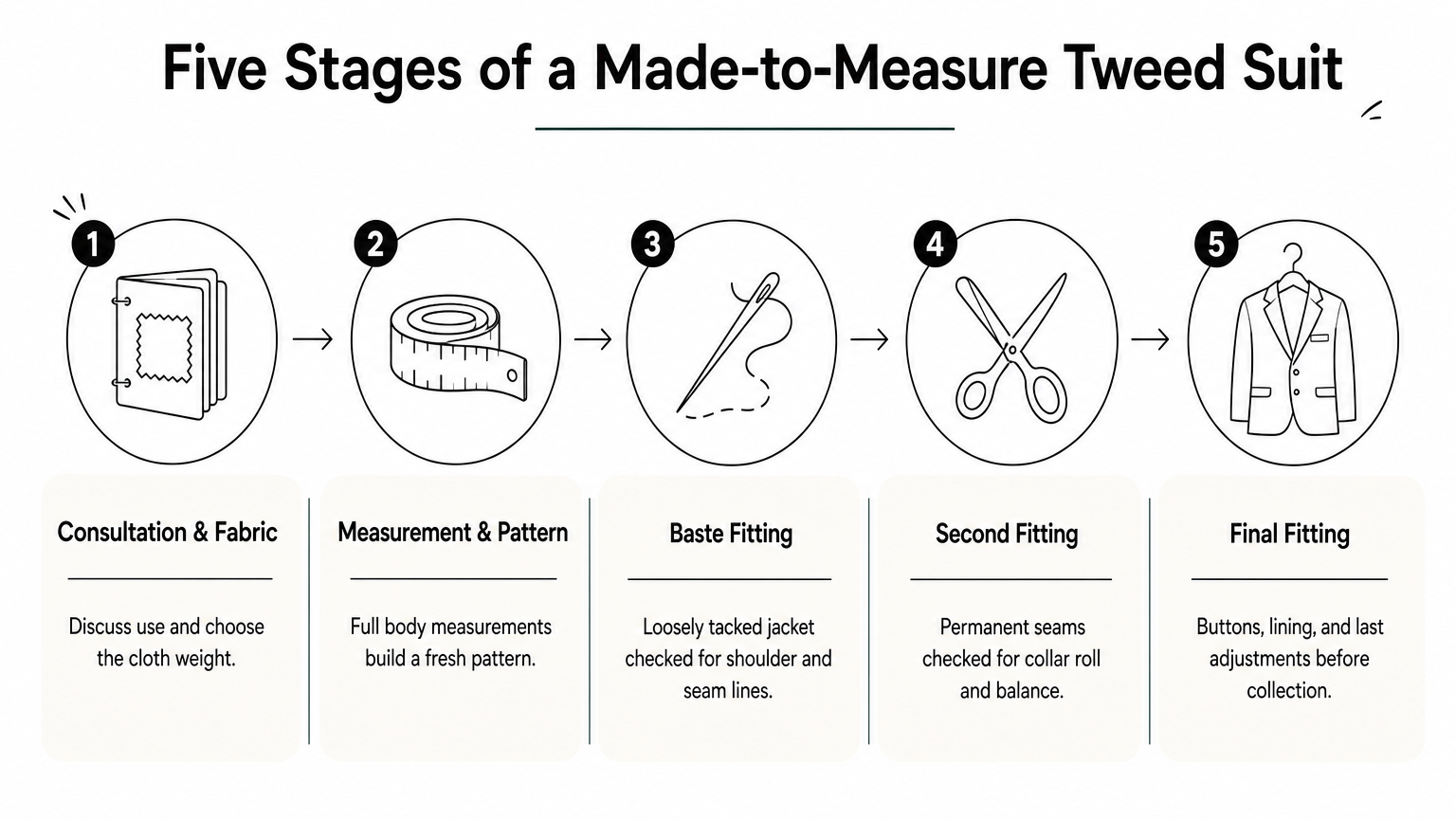
Making a tweed suit starts long before anyone picks up a shears. The process moves through distinct stages, each one building on the last, so a mistake at the measurement stage doesn’t surface as a wrinkle at the final fitting. Understanding these stages helps you know what you’re paying for and why a made to measure tweed suit takes weeks rather than days.
Consultation and fabric selection
Everything begins with a conversation about how you’ll actually wear the suit. A tailor needs to know whether it’s a country weekend jacket, an office suit worn under air conditioning, or a one-off piece for a wedding, because that shapes both the cloth weight and the cut. During this stage you’ll also handle swatches, since tweed’s texture and color read very differently under shop lighting than they do outdoors. At Stitch & Style’s suiting cloth by the metre shop, you can order swatches or full lengths cut straight off the mill roll, so the cloth you feel is the cloth that ends up on the bench.
Measurements and the first pattern
Once the fabric is chosen, the tailor takes a full set of measurements and drafts a working pattern from scratch, not from a pre-existing block. This is the step that separates true made-to-measure from adjusted stock sizing.
The pattern is the suit. Everything after that is just cutting, sewing, and pressing it into shape.
A typical process runs through these fitting stages:
- Initial measurement and pattern draft – full body measurements plus posture notes
- First fitting (baste stage) – the jacket is loosely tacked together so seams and shoulder lines can be checked and marked for adjustment
- Second fitting – the jacket returns with permanent seams, checked again for collar roll, sleeve pitch, and balance
- Trouser fitting – rise, break, and seat are confirmed separately, since tweed trousers hold a crease differently than lighter wool
- Final fitting and collection – buttons, lining, and any last adjustments are finished before the suit is pressed and handed over
Timeline and turnaround
Four fittings sound slow, but each one exists to catch something the last one couldn’t. Given tweed’s density, a shoulder line that looks fine at the baste stage can still shift once the canvas and lining are sewn in, so skipping a fitting round risks the exact fit problem made-to-measure is meant to solve. Full tailoring on a tweed suit made to measure typically runs about ten weeks from first measurement to final collection, which matches the realistic turnaround for a suit made in Bangkok, though rush options exist for weddings or travel deadlines.
General turnaround expectations look like this:
| Stage | Typical timing |
|---|---|
| Consultation and fabric choice | Day 1 |
| First fitting (baste) | Week 2-3 |
| Second fitting | Week 5-6 |
| Final fitting and collection | Week 9-10 |
Rushed orders compress this timeline, and it’s worth knowing what a 48-hour Bangkok suit actually gets you, but the fitting count rarely changes, since tweed still needs each check regardless of how fast the calendar moves.
Tweed fabric types and patterns explained
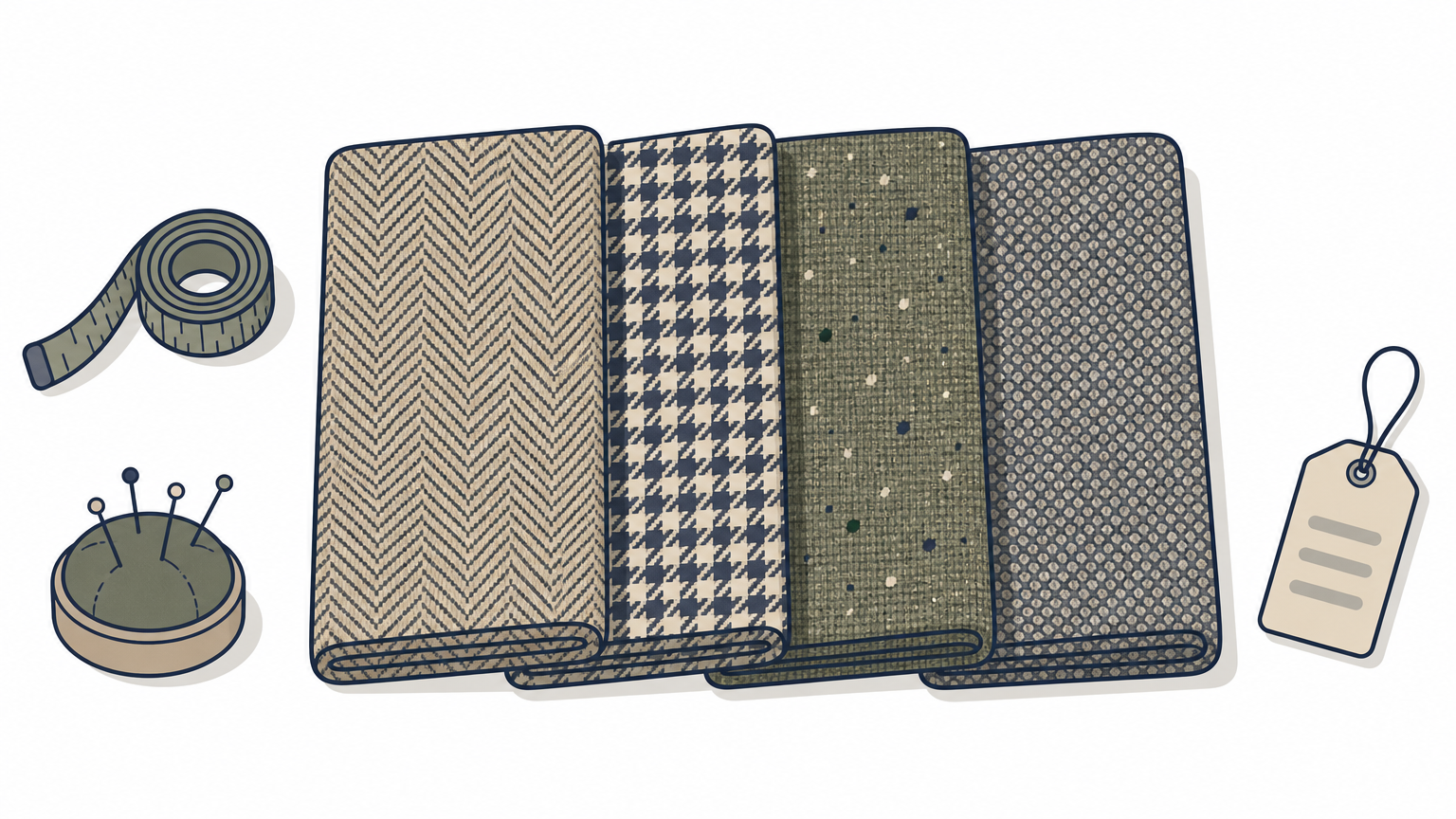
Tweed isn’t one fabric, it’s a family of woven wool cloths that vary enormously in weight, texture, and pattern. Ordering a made to measure tweed suit without understanding these differences is like ordering a custom shirt without picking a color. The weave and weight you choose determine how the suit drapes, how warm it feels, and whether it reads as a country jacket or a genuine business suit. Getting this choice right at the fabric stage saves you from a beautiful pattern that turns out wrong for how you’ll actually wear the finished garment.
Weight and weave basics
Traditional Scottish and Irish tweeds run heavy, often 16 to 18 ounces per yard, built for cold, damp climates where the cloth needs to block wind. That weight works fine in London or New York in January, but it’s miserable in Bangkok traffic. Lighter tweed weaves, closer to 9 to 11 ounces, keep the texture and character of tweed while cutting the insulation down to something wearable in a warm, humid city, much like a tropical wool suit does with conventional suiting. The weave itself also matters: a tighter twill weave sheds moisture and holds shape better than a loose, open weave, which tends to sag in humidity and pick up creases that don’t fall out easily.
Tweed’s weight decides whether you wear the jacket comfortably or just own it as a photograph.
Common patterns and what they signal
Pattern is where tweed gets its personality, and each one carries a slightly different level of formality and visual weight.
| Pattern | Look | Best suited for |
|---|---|---|
| Herringbone | Zigzag weave, subtle from a distance | Business-adjacent wear, versatile |
| Houndstooth | Broken checkered pattern | Statement jackets, smaller checks read more formal |
| Donegal | Flecked, irregular color specks | Casual, textured, hides wear well |
| Birdseye | Small diamond dot pattern | Understated, close to a solid |
| Windowpane | Thin overlaid grid lines | Bold, works best on solid ground colors |
Herringbone and birdseye tend to photograph and wear the most like a conventional suit, which matters if you want a tweed suit made to measure that can double as office wear rather than strictly weekend attire. Houndstooth and windowpane carry more visual noise, so they suit a jacket worn on its own rather than a full matching suit unless the check is kept small.
Choosing tweed for a warm climate
Bangkok’s heat changes the calculation entirely compared to buying tweed in a cooler country. Half of Stitch & Style’s fabric book is dedicated to the weights and weaves that actually work in a tropical climate, specifically because standard tweed weights are unwearable here for more than an hour outdoors. Selecting a lighter weave in a pattern like herringbone or birdseye gives you tweed’s texture and durability without the wool blanket effect that heavier Scottish tweeds bring. If you’re set on a bolder pattern like a large houndstooth, ask your tailor whether a lighter-weight version exists in that weave before committing, since the same pattern can come in dramatically different fabric weights depending on the mill.
Design choices that shape your suit’s style
Beyond fabric, a made to measure tweed suit gives you a long list of construction decisions that off-the-rack tweed simply doesn’t offer. Every choice here interacts with the cloth’s texture, so a detail that looks sharp on smooth worsted wool can read completely differently once it’s cut from a heavy, patterned tweed. Working through these decisions with your tailor before cutting begins is what turns a good fabric choice into a suit that actually looks intentional.
Lapels, buttons, and silhouette
Notch lapels are the safer, more versatile choice for tweed intended to double as business wear, while peak lapels push the jacket toward a more formal, country-house register that suits a bolder houndstooth or windowpane. Button stance matters more with tweed than with plain wool because a two-button jacket in a heavier cloth sits lower and reads bulkier than the same stance in worsted, so a three-button or two-button-with-a-higher-gathering-point often balances the visual weight better. Silhouette follows from there: a structured, slightly nipped waist suits herringbone and birdseye well, while a fuller cut gives Donegal tweed room to hang naturally without the flecked texture looking cramped.
The right lapel and button stance can make a heavy tweed look tailored instead of bulky.
Vents, pockets, and cuffs
Side vents give a jacket more movement, which matters with a stiffer cloth like tweed that doesn’t flex the way a soft wool does when you sit or reach. A single back vent looks more traditional and pairs well with classic herringbone, while double side vents suit a more modern cut. Pocket style changes the jacket’s formality level almost as much as the lapel:
- Flap pockets, the standard choice, works with nearly every tweed pattern
- Patch pockets, casual, leans the jacket toward country or weekend wear
- Jetted pockets, cleanest line, best suited to smoother tweeds like birdseye for a more formal look
- Ticket pocket, a small extra flap above the right hip pocket, a traditional detail that reads well on herringbone
Cuffs matter too. Functioning buttonholes, sometimes called surgeon’s cuffs, are a small detail that signals a genuinely made-to-measure garment rather than adjusted stock, since off-the-rack jackets almost never include them.
Lining, canvas, and finishing details
Lining color is an easy way to add personality without touching the outer cloth. A contrasting lining, deep burgundy against a grey herringbone, for instance, shows only when the jacket moves or you reach into a pocket, which suits tweed’s understated character better than a loud outer fabric would. Canvas construction affects how the jacket drapes over time: a full canvas construction molds to your body with wear, which pairs particularly well with tweed’s tendency to hold shape rather than soften quickly. Finishing details like horn buttons, hand-stitched buttonholes, and a working ticket pocket won’t change how the suit fits, but they’re the kind of choices that separate a tweed suit made to measure from something merely adjusted to fit. None of these decisions are locked in until you sit down with a tailor and work through the suit styles built to your own measurements, which is the entire point of building the pattern around you instead of picking from a rack of finished options.
What a made-to-measure tweed suit costs
Price is where most people get made-to-measure tweed wrong. They compare the sticker price to a department store rack and assume the gap is pure markup, when really it’s paying for labor, fabric sourcing, and a pattern built specifically for one body. A made to measure tweed suit costs more than off-the-rack because more hours go into it before the first stitch, not because the fabric itself is dramatically more expensive per yard.
What actually drives the price
Fabric weight and origin matter, but they’re rarely the biggest line item. A genuine mill-woven tweed from Somerset or Biella costs more than a blended commercial cloth, but the difference per suit is usually a few thousand baht, not tens of thousands. Labor is the real variable: four fittings, hand-finished details like working cuff buttons, and a pattern drafted from scratch all add hours a factory-made suit skips entirely. Turnaround speed changes the number too, since a rushed order compresses the same fitting schedule into fewer weeks without cutting any steps, which usually carries a premium.
You’re not paying extra for tweed. You’re paying for the hours it takes to make tweed fit you specifically.
Typical price ranges
Pricing varies by tailor, city, and fabric grade, and the 2026 price ranges for a custom suit in Bangkok give useful context, but a rough breakdown for a tweed suit made to measure looks like this:
| Suit type | Typical starting price | What changes the price |
|---|---|---|
| Off-the-rack tweed jacket | Lowest cost | Fixed size, no fitting adjustments |
| Made-to-measure tweed suit | Mid-range | Fabric grade, fitting count, finishing details |
| Full bespoke tweed suit | Highest cost | Hand-cut pattern, hand-padded canvas, more fittings |
At Stitch & Style, made-to-order suits start from ฿20,999, with the final price depending on the fabric weight you choose and any added finishing details like a ticket pocket or contrast lining. That starting figure covers a standard tropical-weight cloth; moving up to a heavier mill-direct tweed or adding hand-finished touches shifts the number upward from there.
What’s included in the price
A fair made-to-measure quote should spell out exactly what you’re paying for, not just hand you a single number. Look for a breakdown that covers:
- Fabric cost, including whether swatches or full lengths are checked for faults before cutting
- Number of fittings included, since four is standard for a full tailoring process
- Pattern storage for future orders, so a second suit doesn’t start from zero
- Finishing details like buttons, lining, and canvas construction
- Turnaround time, and whether rush service carries an added fee
Questioning a quote that doesn’t break these out is reasonable. Reputable tailors expect it, since transparency on where the cost goes is part of what separates made-to-measure from a marked-up rack suit with a tailor’s name attached to it.
Wearing and caring for tweed in a warm climate
Bangkok isn’t Edinburgh, and pretending otherwise is how a beautiful tweed jacket ends up hanging unused in a closet. A made to measure tweed suit built for this climate needs a different set of habits than the same fabric would need in a cooler country, both in how often you wear it and how you look after it between wears. Getting these habits right is what makes the investment worth it rather than a piece you save for the two coolest weeks of the year.
When tweed actually works in the heat
Given Bangkok’s heat and humidity, tweed makes the most sense as an evening or indoor piece rather than something worn outdoors at midday, where tropical wool, linen or cotton handles the day better. Air-conditioned offices, restaurants, and events are where a lighter-weight tweed genuinely earns its place, since the texture and warmth read as intentional rather than uncomfortable. Outdoor daytime wear is where even a tropical-weight tweed starts to struggle, so plan the suit around your actual schedule rather than assuming it’ll work for every occasion a plain wool suit handles.
Tweed in Bangkok is an indoor fabric first and an outdoor fabric only in short bursts.
Caring for tweed between wears
Humidity is tweed’s real enemy in this climate, more so than heat itself, and the same rules apply to looking after any tailored suit in humid air. Moisture trapped in the weave encourages mildew and dulls the cloth’s natural texture over time, so airing the jacket out after every wear matters more here than it would in a dry climate. A few habits go a long way toward keeping a tweed suit in good shape:
- Air it out on a wooden hanger for at least a day after wearing, away from direct sun
- Brush it with a natural bristle clothes brush to lift dust and surface grime before it settles into the weave
- Avoid daily dry cleaning, since solvents strip natural oils from wool fibers and speed up wear
- Spot clean small marks with a damp cloth rather than sending the whole jacket to be cleaned
- Rotate wear, giving at least 48 hours between outings so the fibers can fully dry and recover shape
Storage that actually protects the cloth
Storing tweed in Bangkok’s humidity requires more attention than most people expect from a wool garment. A breathable garment bag protects against dust without trapping moisture the way plastic does, and adding silica gel packets or a dehumidifier rod to the closet helps keep mildew from taking hold during the rainy season. Cedar blocks work better than mothballs for keeping insects away, since they don’t leave a chemical smell that lingers in the weave. Checking stored tweed every few weeks during humid months, even just to air it briefly, catches moisture problems before they become permanent stains or a musty smell that’s hard to remove.
Handled this way, a tweed suit made to measure for tropical wear holds up for years rather than becoming a seasonal novelty. The fabric weight you chose at the ordering stage does most of the work; the care habits just protect that investment once the suit is actually in your rotation.
Bespoke vs made-to-measure vs off-the-rack tweed
People throw around "bespoke" and "made-to-measure" like they’re interchangeable, and off-the-rack tweed adds a third option that muddies things further. Each term describes a genuinely different process, not just a different price point, and the differences matter more with tweed than with almost any other fabric because of how unforgiving the cloth is about fit. Knowing exactly what you’re buying under each label keeps you from paying bespoke prices for made-to-measure work, or expecting bespoke results from a rack suit with the sleeves taken in.
What separates the three approaches
Off-the-rack tweed starts from a finished jacket built to a standard size block, and any changes happen after the fact through darts, taken-in seams, or a shortened hem. Made-to-measure tweed starts from your actual measurements, with a pattern drafted before the fabric is cut, though it still relies on a base block that gets adjusted rather than built entirely from scratch. Full bespoke goes a step further: the pattern is drafted by hand for you alone, with no base block involved, and construction details like a hand-padded canvas are done by hand rather than machine. The gap between made-to-measure and bespoke is smaller in the finished look than most people expect, but it shows up in fitting count, hand-finishing, and price, and it’s worth seeing how a Bangkok tailor shop draws that line in practice.
Off-the-rack fits the average. Made-to-measure fits you. Bespoke fits you and remembers how you move.
Comparing the three side by side
| Factor | Off-the-rack | Made-to-measure | Full bespoke |
|---|---|---|---|
| Starting point | Finished stock size | Base pattern adjusted to your measurements | Pattern drafted from scratch |
| Fittings | None or one alteration visit | Two to four | Three or more, often over multiple visits |
| Fabric choice | Limited to stock | Wide range, mill-direct available | Wide range, mill-direct available |
| Turnaround | Immediate | 6-10 weeks | 8-12 weeks or longer |
| Typical cost | Lowest | Mid-range | Highest |
| Pattern kept on file | No | Usually | Always |
Which one actually makes sense for tweed
Given how heavy and structured tweed is, off-the-rack is the riskiest option of the three, since alterations can only do so much with a cloth that holds its shape rather than draping around a bad fit. Full bespoke gives you the most control and the best possible fit, but the extra cost and time only pay off if you’re planning to wear tweed regularly enough to justify it. Made-to-measure tweed suits sit in the sensible middle for most people: close enough to bespoke fit that the fabric’s honesty about poor tailoring stops being a problem, without the full bespoke price tag or the longest possible turnaround. If you’re ordering one tweed suit for occasional wear in a warm climate, made-to-measure through a service like Stitch & Style’s full tailoring gets you a pattern on file, a proper fitting process, and a suit that actually looks intentional, without paying for a level of hand-finishing you may never need.
A suit that’s built around you
A made to measure tweed suit comes down to one simple trade: you spend more time in fittings so the jacket spends less time fighting your posture. Tweed doesn’t forgive a lazy pattern, but it rewards a good one with texture and durability that a plain worsted suit can’t match. Get the weight right for Bangkok’s climate, pick a pattern that suits how often you’ll actually wear it, and the rest, lapels, vents, lining, becomes the fun part rather than a source of stress.
The real difference between a jacket you love and one you avoid wearing usually traces back to the pattern stage, not the fabric bolt. That’s true whether you’re ordering your first tweed suit made to measure or replacing one that never fit right off the rack. If you’re ready to talk fabric, fit, and turnaround with someone who’ll actually measure you first, book a fitting with our Bangkok tailors and start the conversation.