
Typing "made-to-measure suits near me" into Google gets you a map full of pins and almost no useful information. Which of those tailors actually cut their own patterns? Which ones just take your measurements and ship them off to a factory overseas? You can’t tell from a star rating, and picking wrong means weeks of waiting for a jacket that still doesn’t sit right on your shoulders.
Finding a good tailor comes down to checking a handful of specific things before you book a fitting, not just proximity on a map. Where the fabric comes from, how many fittings are included, and whether the person measuring you is the same person cutting the cloth all matter more than a five-star average.
We’ve spent over two decades on the bench in Bangkok, so we know exactly what separates a shop worth your time from one that’s just reselling someone else’s work. This guide walks through five practical checks to run on any local tailor, whether you’re outfitting yourself for a wedding next month or just want a suit that actually fits.
1. Look for mill-direct fabric sourcing and quality control
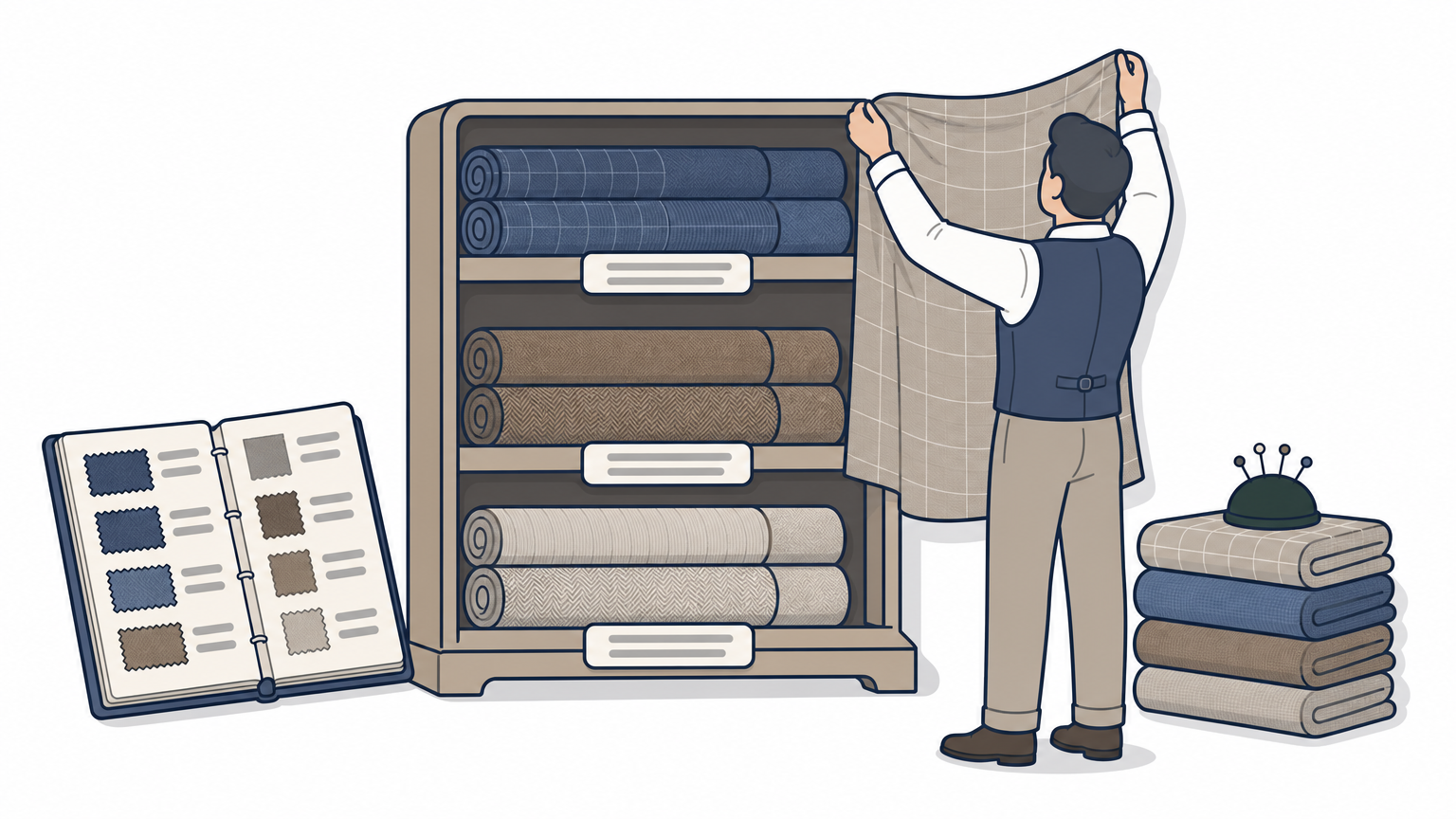
Most tailors don’t grow their own cloth, but the good ones know exactly where every bolt on the shelf came from. Mill-direct sourcing means the fabric travels from a weaving mill in Italy, England, or Thailand straight to the tailor’s shelf, skipping the jobbers and wholesalers who buy up remnants and mixed lots — and why sourcing matters for a bespoke suit comes down to exactly that chain. When a shop can’t tell you the mill name, that’s usually because they bought a mixed pallet from a broker and don’t actually know.
What to look for
Ask to see the fabric book and check if it lists mill names, not just "100% wool" or "premium Italian cloth." A tailor sourcing direct will happily point to specific mills, whether that’s Somerset for tweeds, Biella for Italian worsteds, or Surin for tropical-weight cottons and linens. Also watch how the cloth gets handled before cutting. Every length should get checked under daylight for faults like slubs, dye inconsistencies, or weave flaws before anyone touches it with shears.
Why it matters
Fabric quality determines how a suit drapes, breathes, and holds up over years of wear, far more than the cut alone. A jacket cut from a flawed or low-grade length will pill, sag, or lose its shape within a season, no matter how skilled the tailor is.
A tailor who can’t name their mill probably can’t guarantee what’s actually in your suit.
This matters even more in humid climates, where choosing the right cloth weight and weave for heat means a tropical-weight fabric sourced for breathability performs completely differently than a heavier European wool stuffed into the same rack.
Questions to ask
- Which mills supply your fabric, and can I see samples with the mill name attached?
- Do you check every length for faults before cutting, and under what lighting?
- Do you carry tropical-weight options suited to hot, humid weather?
- Is there a minimum length I have to buy, or can I get just enough for one garment?
Our own suiting fabric by the length is listed mill-direct for exactly this reason: transparency should start before the tape measure ever comes out.
2. Ask about the measurement and fitting process
A number on a spec sheet doesn’t tell you how a jacket feels across your shoulders after an hour at your desk. Made-to-measure suits near me searches often turn up shops that take one quick measurement and send the order to a factory, with zero fittings before the finished garment ships. The difference between that and true bespoke tailoring, pattern and all, shows up the first time you raise your arm and feel the sleeve pull.
What to look for
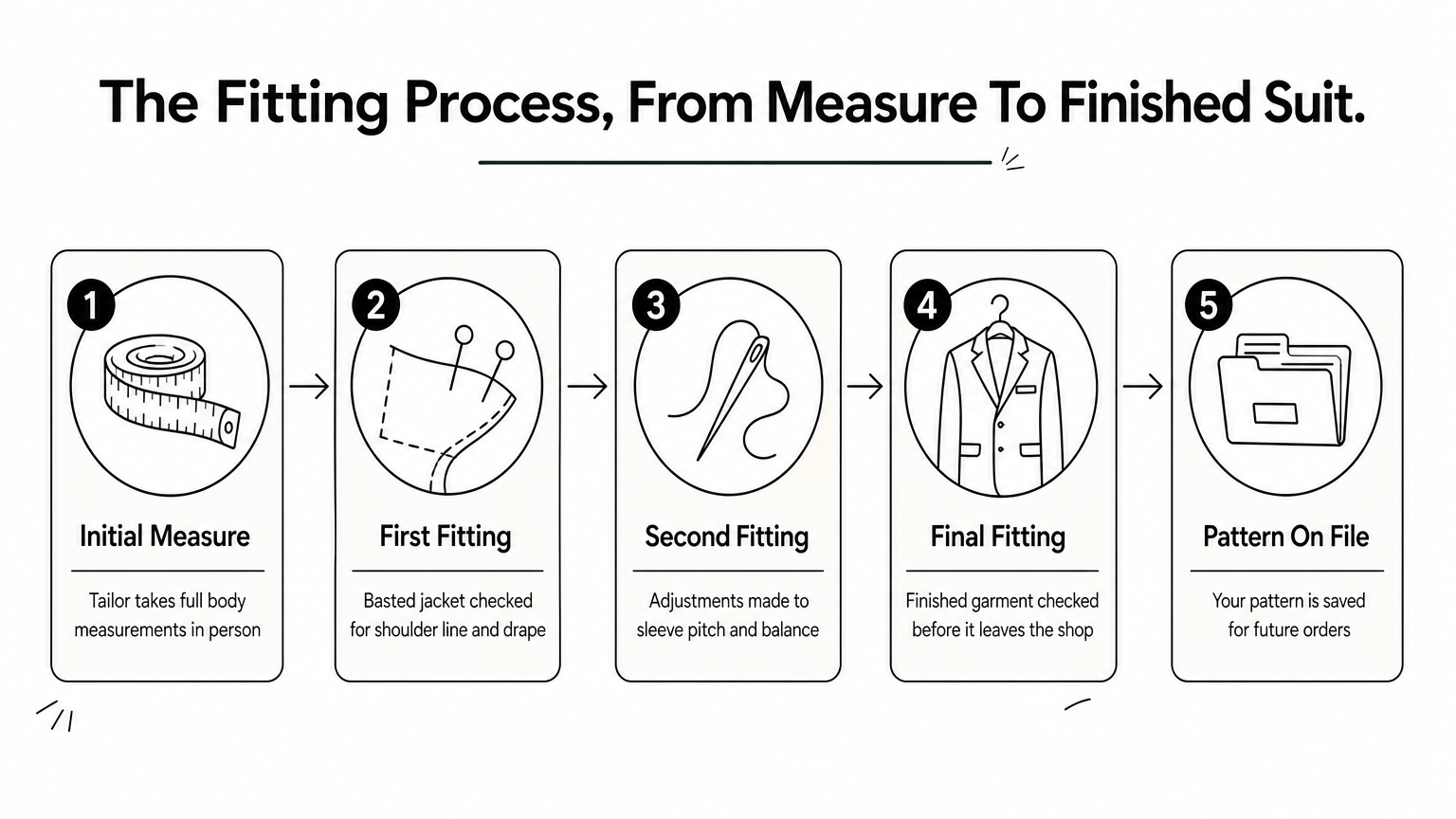
Confirm how many in-person fittings are built into the process, not just the initial measuring session. A proper full tailoring build usually includes multiple fittings across several weeks, checking shoulder line, drape, and sleeve pitch as the garment comes together on your own frame.
Why it matters
Fit is what separates a suit that looks tailored from one that just looks new.
A single measurement without follow-up fittings is a guess dressed up as a fit.
Ask whether your pattern gets kept on file for future orders, since that saves you a full remeasure next time.
Questions to ask
- How many fittings happen before the suit is finished?
- Who takes the measurements, the same person who cuts the cloth?
- Do you keep my pattern on file for repeat orders?
3. Compare turnaround times and rush-order options
Weddings, job interviews, and last-minute business trips don’t wait for a ten-week production schedule. Anyone searching for made-to-measure suits near me on a deadline needs to know upfront whether a shop can actually deliver in days rather than months, and what that speed costs in quality or fitting steps.
What to look for
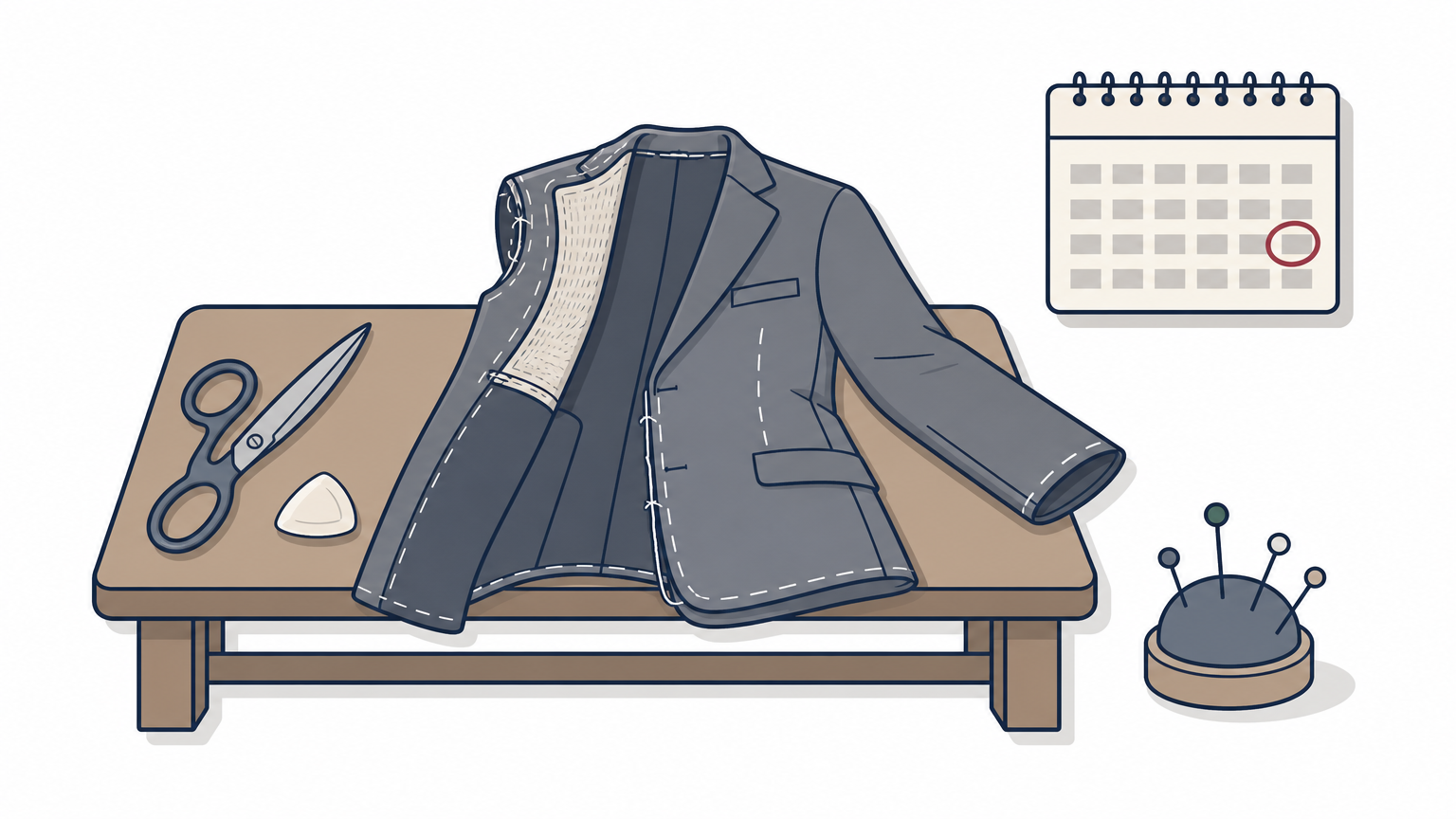
Given a firm date, ask the tailor to walk you through their standard timeline versus their rush option, step by step. A shop with its own workshop bench can often compress a build to two or three days by prioritizing your cut ahead of the queue — here’s what a 48-hour suit in Bangkok actually gets you — while one outsourcing to a factory usually can’t move faster than the shipping schedule allows.
Why it matters
Rush orders only work when the tailor controls every stage in-house, from cutting to pressing.
If a shop needs a factory’s permission to rush your order, it isn’t really a rush option.
Outsourced production adds freight time you can’t negotiate away, no matter how much you’re willing to pay.
Questions to ask
- What’s your fastest turnaround for a full suit, start to finish?
- Does a rush order skip any fittings?
- Is rush production done on-site or sent elsewhere?
4. Get clarity on pricing and what’s included
A quoted price means nothing until you know what it actually covers. Some shops advertise a low headline number, then charge extra for fittings, alterations, or even the second fitting if your shoulders needed reshaping. Anyone comparing custom suit tailors in the same city will find the spread between quotes often comes down to what’s bundled in, not the base skill level of the cutter.
What to look for
Request a full breakdown before you commit: fabric cost, labor, number of fittings, and any charge for future alterations. A transparent shop can tell you a starting price for a two-piece suit, like ฿20,999, and explain exactly which fabric tier and fitting count that covers; our breakdown of what a custom suit costs in Bangkok in 2026 sets out the usual ranges.
Why it matters
Hidden fees turn a fair price into a frustrating one once the invoice lands.
The real price of a suit is whatever it costs after every fitting, not the number on the sign.
Knowing the full cost upfront also lets you compare fabric upgrades honestly, instead of guessing what a heavier wool or silk blend adds later.
Questions to ask
- What’s included in the base price, and what costs extra?
- Are alterations after the final fitting free or billed separately?
- Does the price change if I bring my own fabric?
5. Check reviews, portfolios, and in-person craftsmanship
Star ratings alone don’t tell you much, but the pattern behind them does. Reading through dozens of reviews for bespoke tailors near me searches will show you which shops get praised for fit and turnaround versus which ones just get thanked for a friendly chat. Photos matter more than text here, since a portfolio of finished garments shows you the actual stitching, buttonholes, and lapel rolls a shop produces.
What to look for
Look past the star average and read the recent reviews in detail, especially any that mention specific garments rather than general service. A shop’s client gallery of finished bespoke suits should show a range of body types and fabrics, not just three flattering photos reused for years.
Why it matters
Craftsmanship shows up in small details: hand-finished buttonholes, even lapel rolls, and pressing that holds its crease.
A photo of a finished suit tells you more than a five-star average ever will.
Visiting the workbench in person, if you can, confirms the shop actually makes what it shows.
Questions to ask
- Can I see recent finished garments in person, not just photos?
- Are these reviews from repeat clients or one-time orders?
- Who cuts and presses the suits shown in your gallery?
Finding the right tailor for you
Running through these five checks takes maybe twenty minutes across a few phone calls or shop visits, and it saves you from a suit that never fits right. Fabric sourcing, fitting schedules, turnaround, pricing, and actual craftsmanship tell you more than any map pin ever will. Skip the guesswork and you’ll walk into your first fitting already knowing what to expect instead of hoping for the best.
Since 2003, we’ve built our whole process around answering these exact questions honestly: mill-direct cloth, fittings on our own bench, and rush builds completed in days when a wedding or flight won’t wait. No outsourcing, no mystery pallets, no vague pricing. That’s what made-to-measure suits near me should actually mean once you know what to look for.
If you’re in Bangkok or planning a trip here, book a fitting at our Bangkok atelier and see the bench for yourself before you commit.